
Beginner Sourdough Bread Recipe
Introduction
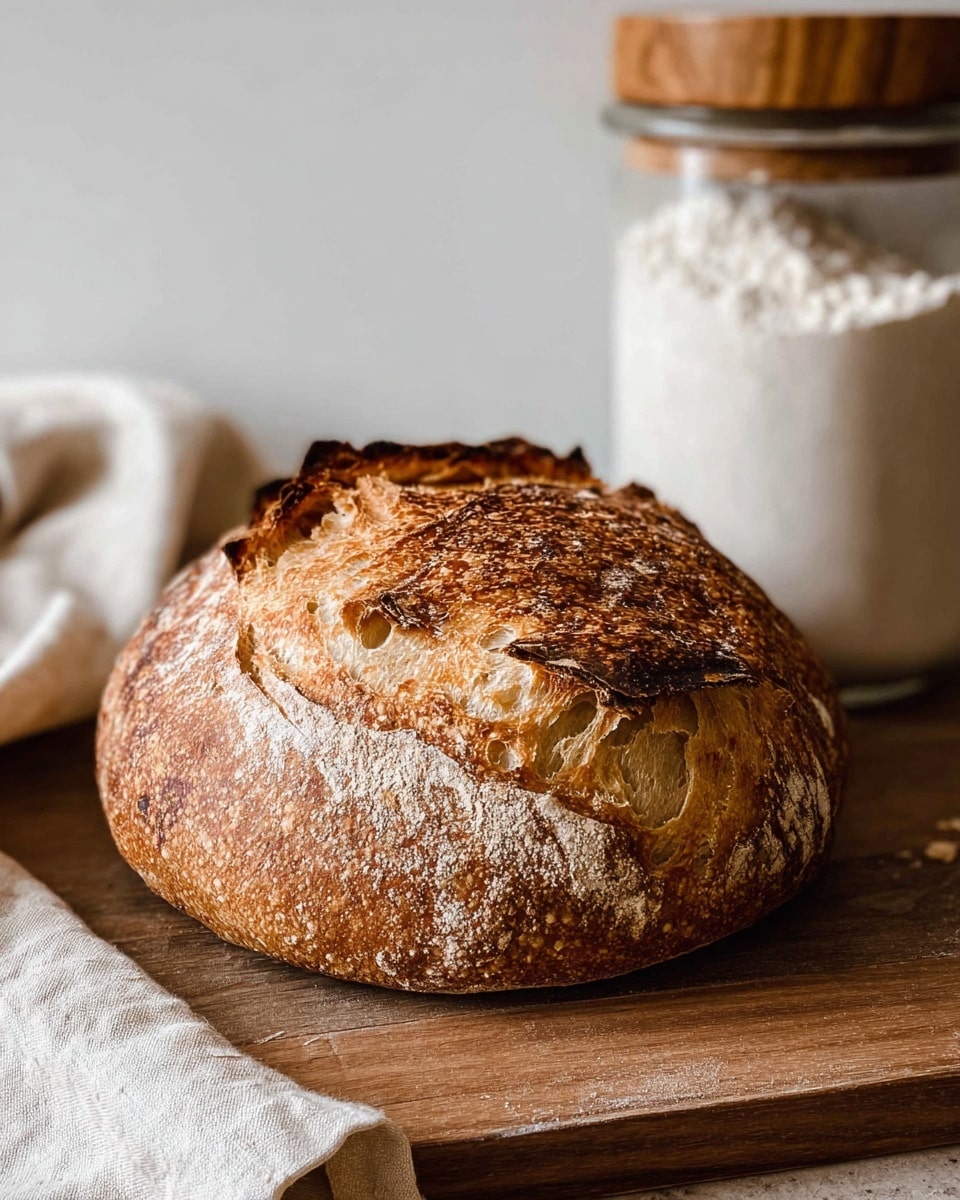
Making sourdough bread at home can seem intimidating, but this beginner-friendly recipe breaks it down into simple steps. With just a few ingredients and some patience, you’ll create a delicious, crusty loaf that fills your kitchen with a wonderful aroma.
Ingredients
- 2 teaspoons (10 g) sourdough starter
- 3 tablespoons (25 g) all-purpose flour
- 5 teaspoons (25 g) water
- ¼ cup (50 g) active sourdough starter (100% hydration)
- 1 ⅓ cups + 2 tablespoons (350 g) water
- 2 teaspoons (10 g) fine sea salt
- 4 cups + 2 tablespoons (500 g) bread flour
Instructions
- Step 1: Feed your sourdough starter 12 hours before mixing the dough. Combine 2 teaspoons starter, 3 tablespoons flour, and 5 teaspoons water in a clean jar. Stir, loosely cover, and let it rise at room temperature until doubled and bubbly.
- Step 2: Mix the dough by transferring ¼ cup (50 g) of active starter and 1 ⅓ cups + 2 tablespoons (350 g) water into a large bowl. Stir to combine.
- Step 3: Add 4 cups + 2 tablespoons (500 g) bread flour and 2 teaspoons (10 g) sea salt. Use a stiff spatula or your hands to mix until a shaggy mass forms with no dry flour left.
- Step 4: Cover the bowl and let the dough rest at room temperature for 1 hour.
- Step 5: Perform a stretch and fold: wet your hand to prevent sticking, grab one side of the dough, stretch it up and fold it over itself. Rotate the bowl a quarter turn and repeat until the bowl has completed a full turn. The dough should tighten into a ball.
- Step 6: Cover and rest the dough for 30 minutes. Repeat the stretch and fold once more.
- Step 7: Cover the bowl and let the dough rise for 7–10 hours at room temperature. The dough should increase by about 50–75% but not double.
- Step 8: Turn the dough onto a lightly floured surface. Shape it into a ball by folding the sides into the center. Flip it seam-side down and gently cup, pulling and twisting towards you to create a tight skin.
- Step 9: Transfer the dough onto parchment paper seam-side down. Use the parchment as a sling to place the dough into a medium bowl. Cover with a tea towel and rest for 1–2 hours.
- Step 10: Test for readiness by pressing a thumb indentation about ½ inch deep. If it springs back quickly, let it rise longer; if it springs back slowly or not fully, it’s ready to bake.
- Step 11: 30 minutes before baking, preheat the oven to 450°F (232°C) with a Dutch oven inside.
- Step 12: Carefully remove the hot Dutch oven and take off the lid. Score the dough with a sharp knife or razor. Use the parchment sling to lift and place the dough in the Dutch oven.
- Step 13: Cover with the lid and bake for 20 minutes. Remove the lid and bake another 25–30 minutes until the crust is golden and the internal temperature reaches 205–210°F (96–99°C).
- Step 14: Cool the bread on a rack for 1–2 hours before slicing to avoid a gummy texture.
Tips & Variations
- Use a digital thermometer to check the bread’s internal temperature for perfect doneness.
- Replace bread flour with a mix of whole wheat and bread flour for a nuttier flavor.
- For extra flavor, add herbs or garlic during the mixing stage.
- If you don’t have a Dutch oven, bake on a preheated baking stone and use a tray of water to create steam in the oven.
Storage
Store sourdough bread at room temperature in a bread bag, wrapped in a kitchen towel or beeswax wrap for up to 3 days. Avoid refrigeration, which dries out the bread. For longer storage, freeze whole loaves or slices tightly wrapped in plastic and in a freezer-safe container for up to 3 months. Reheat slices in a toaster or oven for best texture.
How to Serve
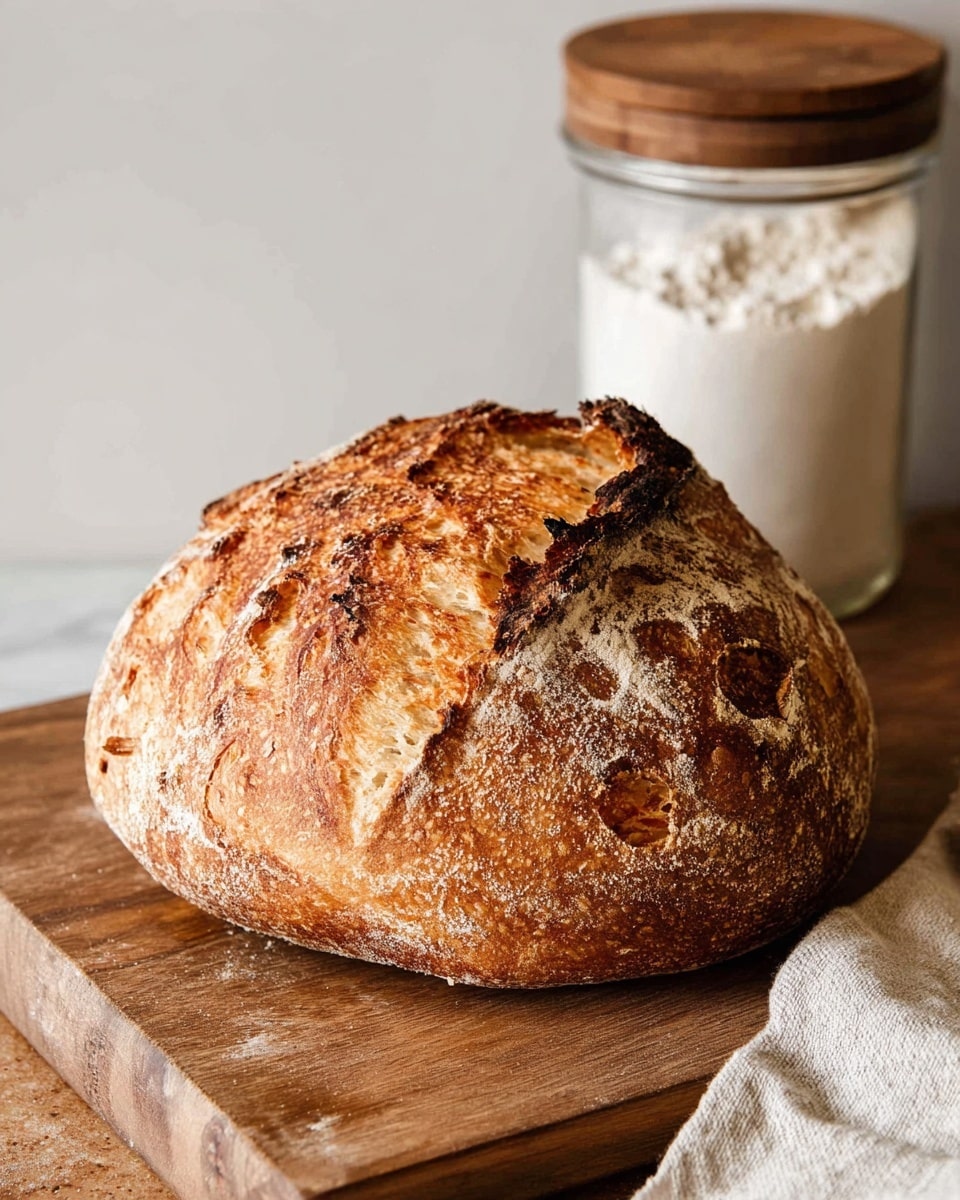
Serve this delicious recipe with your favorite sides.
FAQs
How do I know if my sourdough starter is active and ready?
Your starter is ready when it has doubled in size and is bubbly on the surface and sides of the jar, usually about 6–12 hours after feeding.
Can I speed up the rising time?
Rising times depend on room temperature and starter strength. Warmer environments speed fermentation, but rushing the process may affect flavor and texture. Patience yields the best results with sourdough.
Print
Beginner Sourdough Bread Recipe
- Total Time: Approximately 20-24 hours (including all resting and fermentation times)
- Yield: 1 medium-sized loaf (about 800–900 g finished bread) 1x
- Diet: Vegetarian
Description
This Beginner Sourdough Bread recipe guides you through creating a delicious, crusty homemade sourdough loaf starting from feeding your own sourdough starter to baking it in a dutch oven. The recipe involves natural fermentation with no commercial yeast, resulting in tangy flavor and an open chewy crumb, perfect for sandwiches or enjoying with butter and jam.
Ingredients
Sourdough Starter
- 2 teaspoons (10 g) sourdough starter
- 3 tablespoons (25 g) all-purpose flour
- 5 teaspoons (25 g) water
Dough Ingredients
- ¼ cup (50 g) active sourdough starter (100% hydration)
- 1 ⅓ cups + 2 tablespoons (350 g) water
- 2 teaspoons (10 g) fine sea salt
- 4 cups + 2 tablespoons (500 g) bread flour
Instructions
- Feed your Sourdough Starter: About 12 hours before mixing the dough, combine 2 teaspoons of sourdough starter, 3 tablespoons of all-purpose flour, and 5 teaspoons of water in a clean jar. Stir well, loosely cover, and let it rise at room temperature until it doubles in size and is bubbly, indicating it’s active and ready for dough making.
- Mix the Dough: Transfer 50 g of active starter and 350 g water to a large bowl and mix to distribute. Add 500 g bread flour and 10 g sea salt, then mix with a stiff spatula or hands until no dry flour remains and a shaggy mass forms. Cover and rest for 1 hour at room temperature.
- Stretch and Fold (First): Wet your hand to prevent sticking, lift one side of the dough, stretch it upward and fold it over itself. Rotate the bowl 90°, repeat until full circle is complete. This motion tightens the dough into a ball. Cover and rest for 30 minutes.
- Stretch and Fold (Second): Repeat the stretch and fold technique once more to develop dough strength and volume. Then cover the bowl and begin bulk fermentation.
- Bulk Fermentation: Let the dough rise covered on your kitchen counter for 7-10 hours. It should increase about 50-75% in size and feel slightly puffy though not doubled. If it over-proofs (doubles in size and difficult to shape), shorten the next rising time.
- Shape and Second Rise: Turn dough onto a floured surface. Shape into a tight ball by folding the sides into the center, flipping seam-side down. Gently cup and twist the dough to tighten the skin. Transfer dough on parchment paper into a medium-sized bowl, cover with a tea towel, and rest for 1-2 hours at room temperature. Check readiness by indentation test—if the dough springs back quickly, it needs more resting time.
- Score and Bake: Preheat oven with dutch oven inside to 450°F (232°C) about 30 minutes before baking. Carefully remove hot dutch oven, lift dough by parchment sling and score the dough top with a razor or sharp knife. Place dough inside, cover with lid, bake 20 minutes, then remove lid and bake 25-30 minutes more until crust is golden brown and internal temperature reads 205-210°F (96-99°C).
- Cool: Transfer bread to a wire rack and cool for 1-2 hours to complete cooking and prevent a gummy crumb.
- Store and Serve: Store bread wrapped in a kitchen towel or bread bag at room temperature, avoid refrigeration. Freeze wrapped tightly for up to 3 months. Serve warm with butter, Nutella, or jam for best enjoyment.
Notes
- Use a digital thermometer to check bread’s internal temperature is between 205-210°F for perfect doneness.
- Over-proofed dough results in a dense loaf; adjust rising times accordingly.
- Do not refrigerate bread to maintain crust quality and flavor.
- Keep hands wet when stretching and folding dough to avoid sticking.
- Using a dutch oven creates steam that helps form a crispy crust.
- Cool bread completely before slicing to avoid a gummy texture.
- Prep Time: 15 minutes (plus 12 hours for starter feeding and 7-10 hours for bulk fermentation)
- Cook Time: 45-50 minutes
- Category: Bread
- Method: Baking
- Cuisine: Western/Artisan
Keywords: sourdough bread, artisan bread, no yeast bread, homemade bread, baking bread, starter, fermentation